Found the cause: greenhouse-controller's firmware channel changed from stable to nightly at 01:48 UTC, 12 minutes before greenhouse-controller first failed
Put greenhouse-controller back to stable, its last good setting
greenhouse-controller is back on its last good setting
greenhouse-controller · firmware channel
stable
Asked
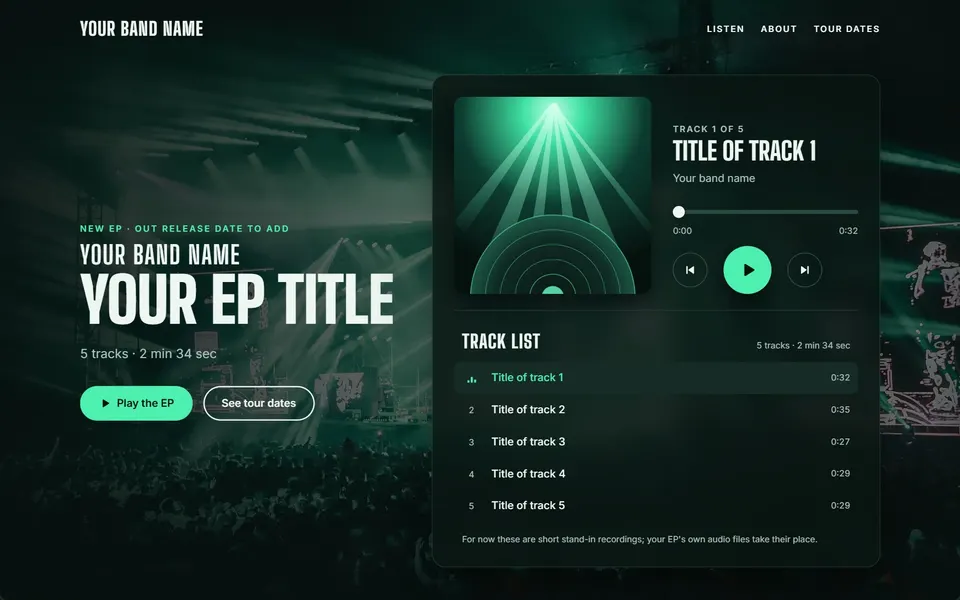
“A music player page for a band's new EP with track list, play and pause, a progress bar and tour dates”
See how your home or office connection reaches the internet – online, IPv4 or IPv6, the encryption on the way and the nearest edge – measured in your browser, now.
15 devices on the network, each one namedWhat Xovris maps
XovrisOn its own
Maps every device on the network, from the firewall pair to the last camera
Named each by what it answers on
A device of any make is identified from its maker’s address, mDNS, DHCP and open ports
Upgrades each one through its own interface and reads the version back
Checks every device you connect for known holes
Technical detail
RoutersMake, model and firmware version; how it answers from inside your network – delay and loss – and its settings pageUpgrades itself: MikroTik · Cisco, DrayTek Vigor, Huawei and Juniper Networks …
FirewallsMake, model and exact version, checked every day against the maker’s security notices and the holes attackers are using nowUpgrades itself: Fortinet FortiGate and Palo Alto Networks · Check Point, Cisco, Fortinet FortiGate and Juniper Networks …
Remote-access gateways (VPN)Exact version, checked first against the holes attackers are using nowUpgraded through its own interface · Ivanti Connect Secure and SonicWall
Servers and virtualisationThe exact version of a hypervisor, a server’s management card or a load balancer, checked every day for known security holesUpgraded through its own interface · Citrix NetScaler, F5 BIG-IP, HPE iLO and Proxmox VE …
SwitchesMake, model and exact version of each switch, checked every day for known security holesUpgraded through its own interface · Arista, Cisco, Dell and Extreme Networks …
Storage boxes (NAS)Make, model and version – from Synology’s and QNAP’s own APIs or over SNMP – and whether its file sharing answersUpgrades itself: Synology · QNAP, Synology and TrueNAS
UPS and powerThe network card’s make and firmware version, checked for known security holesUpgraded through its own interface · APC by Schneider Electric, CyberPower, Delta Electronics and Eaton (and MGE) …
Wi‑Fi controllers and access pointsMake, model and exact version of each access point, checked every day for known security holesUpgraded through its own interface · HPE Aruba and Zyxel
ComputersIts health – a firewall left off, a full disk, an app that keeps crashing – the software installed and the system’s exact versionUpgrades itself: Apple Mac (macOS), Linux (Debian, Ubuntu, Red Hat, Rocky, AlmaLinux, Fedora, SUSE and more) and Microsoft Windows · Apple Mac (macOS), Linux (Debian, Ubuntu, Red Hat, Rocky, AlmaLinux, Fedora, SUSE and more) and Microsoft Windows
Phones and tabletsRelease and security patch level through device management, and on your network whether it is answering or asleepUpgraded through its own interface · Apple iPhone, iPad, Watch, TV and Vision Pro and Android phones and tablets
PrintersWhat is wrong, read from the printer itself – out of paper, a jam, low toner, a door open – and its make, model and firmwareUpgraded through its own interface · Brother, Canon, Dell and Epson …
Cameras and recordersMake, model and firmware version, checked every day for known security holesUpgraded through its own interface · Avigilon, Axis, Bosch Security and Dahua …
Smart-home hubs and devicesFound on your network and named – Home Assistant, Philips Hue, Shelly, Tasmota, ESPHome, Sonos – and, with a Home Assistant token, every device the hub cannot reachUpgraded through its own interface · ESPHome, Home Assistant, Philips Hue and Shelly …
What Xovris maps on a business network: every kind of device, how it reads each one and how it upgrades it
01
What Xovris readon its own domain.
xovris.ai is served from Cloudflare, Inc., keeps its DNS on Cloudflare and keeps its email on Microsoft 365. Everything Xovris could read on xovris.ai answers as it should – none of 11 readings is wrong.
Networks on xovris.ai23:05:28 UTC
Address
Fine
Browsers can find it.
Secure connection (HTTPS)
Fine
Answered your browser over HTTPS in 74 ms.
Page from outside
Fine
Answered Xovris’s probe with 200 in 98 ms.
Certificate
Fine
Valid until 31 December 2026 – 42 days left.
Security headers
Fine
Graded A+ for the headers that tell browsers how to protect your visitors.
Registration
Fine
Registered until 1 October 2028.
Address book (DNS)
Fine
2 name servers at Cloudflare.
Signed address book (DNSSEC)
Fine
Signed and validated: forged answers about where this domain lives are rejected.
Email protection
Fine
Email that pretends to be from this domain is stopped (DMARC p=quarantine), and its own email is signed (DKIM), which keeps it out of spam folders.
Certificate rules
Fine
Only the certificate authorities named here may issue its certificates.
Lookalike addresses
Fine
Similar names registered by someone: 5 of the 40 likeliest, 2 of them taking email. That is ordinary – most similar names are someone else’s own. This check reads only that they exist; when Xovris watches your address it opens each one and raises only a name that imitates yours.
XovrisOn its own
What Xovris sees on a domain, line by line.
The values behind each answer, exactly as they were recorded.
What a fix gives you: what broke, what changed and that it works again.
Install Xovris on a computer on the network and allow, in plain words, what it may check. The check above runs in your browser with nothing to install.
What Xovris watches
Your connection layer by layer – the Wi-Fi or cable, the router, your provider’s line and its network
The one layer at fault, named with the measurements that prove it – and a letter for your provider when it is theirs
How your connection reaches the internet from this browser: IPv4 or IPv6, the encryption on the way and the nearest edge
What Xovris puts right
Settings on your own computer you allowed Xovris to fix, tested before and after
What waits for your permission
Your router and your provider’s line – Xovris reads both, fixes what it can reach itself and, where one act needs hands, asks for that one act and checks it worked
03
Try it now,on your own.
Each of these runs in your own browser in seconds. Here is what each says for xovris.ai, checked 18 November 2026, 23:05:28 UTC – open one to run it on yours.
Lit: live and workingOpen: Xovris is still working on it
When your internet goes wrong, Xovris takes the next step itself: restarts the router, asks for a fresh address, writes to your provider and reads their status page
The network test names the part at fault, and now each next step is something Xovris does itself, within your policy: it restarts an OpenWrt router through its own settings and checks it, asks the router for a fresh address, tests the signal again after you move, sends your provider the case with every measurement and follows it up until it is fixed, and reads your provider's published status page itself.
Check what only your own network can reach, from inside it
On Monitors, one button starts a private probe on a computer of yours that already runs the Xovris app, so a system reachable only inside your network is checked from there.
Keep harmful websites off your home or office network, with a way to ask for one back
Xovris can filter the web for everyone on your network through your own gateway: it judges each site as it is visited, applies the policy you choose, checks that your gateway really took it, shows a clear page when something is blocked, and lets anyone ask for a site to be opened with one press.
Xovris reads NetBox through its own API - its sites, every device with its role, make, model, serial and place, every interface with what its cable reaches, and the addresses and prefixes kept there - and matches every device it reads to its record: recorded but never seen, and seen but never recorded.
Xovris troubleshoots a switch, router or firewall the way a network engineer would
Through the sign-in you gave it, the Xovris app on a computer on your network reads the device itself - its log, its ports and their error counters, its neighbours, spanning tree, power, its VLANs, what it can reach and its last configuration change - then names the cause and fixes it through the same door.
Every switch, router and firewall configuration reviewed, with drift named
Through the same sign-in it troubleshoots with, Xovris reads a device’s whole running configuration and judges every setting by the maker’s own hardening guide and the CIS benchmark for its platform - a rule names a setting, never a make, so every make that states that setting is judged by it - and against the device’s own last good configuration, so a setting that was fine and is now weakened is named with what changed.
Ask for anything in your own words, and Xovris takes it from there
Tell Xovris what you need – “make my Wi-Fi secure”, “my printer says offline” – and it asks only what it needs, one question at a time, asks only for the one act that needs your hands, and asks before it changes anything.
A device joins the network192.168.1.30 appears in the network’s list of neighbours.
Recognised: a printerBecause it answers a print service (ports 80, 631, 9100).
Its readings appearIt answered 4 of 4 tests (0% lost), typically in 3 ms, worst 4 ms.
What needs youThe printer is out of paper.
Technical detail
Model
HP LaserJet Pro M404
Answers
It answered 4 of 4 tests (0% lost), typically in 3 ms, worst 4 ms.
Open ports
80, 631, 9100
Looked at 09:00, then again at 09:05 (UTC). Two network surveys by the Xovris app on an example home, five minutes apart, with a printer plugged in between.
05
Check it nowThe same first read, on the thing you are using
Try it here on yours – it runs in your browser and nothing is sent to Xovris.
Your connection, from outside
Online, IPv4 or IPv6, the encryption on the way and the nearest edge – measured by your browser.
Your browser asks Cloudflare’s public trace page directly – and Cloudflare’s speed test servers while your speed is measured – and shows you their answers. Nothing is sent to Xovris.
Questions
Does Xovris need access to my accounts to watch?
No. Watching needs nothing beyond what anyone on the internet can see. When you want Xovris to fix things, you grant access scope by scope, for as many zones and projects as you choose.
What does the free plan include?
Watching and alerts, free for good. Personal adds fixing: Xovris puts problems right, and an issue counts only once it works again.
Can I undo a fix?
Yes. Every fix has its undo written down before it runs, and a fix that fails its after-test is undone automatically.
Is my data used to train AI?
No. Your data is never used to train our AI. Your systems, files, logs and settings stay yours: they are never used to train any AI, ours or anyone else’s, and nothing of yours ever reaches another customer.
A common way of writing data as named values, readable by people and programs alike.
Data an app reports about itself (telemetry)
The errors, timings and records an app sends out so problems can be spotted and explained.
Program-to-program connection (API, APIs)
A way for one program to ask another for information or to do something, without a person clicking through a website.
Email rules record (DMARC)
An address-book record telling mailboxes what to do with email that fails the domain’s sender checks – deliver it, mark it as spam or refuse it – and where to send reports.